
How Many kW of Solar Do You Need for Your Electricity Bill?
A simple way to estimate your rooftop solar size from your monthly bill and units used, with typical generation per kW and roof space needed.

By Rohit Nishad, Co-founder, Surya Udyan
· 7 min read
- Size your system from monthly units (kWh), not rupees: divide your average monthly units by about 130 to get a starting size in kW.
- Plan for roughly 8 to 10 square metres of shadow-free roof per kW, and check shade through the day.
- Do not oversize. Match your own consumption, with a small margin for appliances you plan to add.
- A site survey matters more than any online calculator because shade, direction and roof condition change real output.
Start with units, not rupees
Many people estimate solar size from the rupee amount on the bill, which is the most common mistake. That figure mixes in fixed charges, taxes, surcharges and slab rates, all of which change from year to year. What your home actually uses is shown in units, written as kWh on the bill. One unit is one kilowatt-hour: running a 1,000-watt appliance for one hour.
Look for the line called units consumed or energy consumed. Write down that number for the last twelve months. If you only have three or four bills, the picture is incomplete, because summer cooling, winter geysers and festival seasons all move the number. A full year gives you an average and a peak.
If you do not have old bills, you can usually see your billing history on your DISCOM's website or app using your consumer number. For Uttar Pradesh consumers, the official UPPCL site and the bill-payment apps show previous readings.
How many units does 1 kW of solar generate?
A properly installed rooftop system in most of Uttar Pradesh generates roughly four to five units per kW per day on average across the year. That works out to about 120 to 150 units a month for each kW of panels. Output is higher on long, clear days in spring and early summer, lower in the monsoon and during winter fog, and it depends on shade, panel tilt and dust.
So the quick rule is: monthly units divided by about 130 gives you a starting system size in kW. If your home uses 260 units a month, you would look at around 2 kW. If it uses 390 units, you would look at around 3 kW. Use this as a starting point for talking to an installer.
| Average monthly use | Starting size | Approx. roof space | Typical home |
|---|---|---|---|
| Up to 150 units | 1 to 1.5 kW | 8 to 15 sq m | Small home, few appliances |
| 200 to 300 units | 2 to 2.5 kW | 16 to 25 sq m | Family home with fans and a fridge |
| 300 to 450 units | 3 kW | 24 to 30 sq m | Home with a cooler or one AC part of the year |
| 450 to 650 units | 4 to 5 kW | 32 to 50 sq m | Home with multiple ACs |
| 650+ units | 5 kW and above | 40+ sq m | Large home or small business |
A worked example
Take a family in a two-storey house with a monthly average of 320 units. In the hot months their use climbs to 480 units because of air coolers and one AC, and in winter it falls to about 220 units. The average over the year is what matters for sizing, but the peak tells you whether you want some extra capacity.
Dividing 320 by 130 gives about 2.5 kW. A system of 3 kW is a natural fit: it generates roughly 360 to 450 units a month on average, slightly above their average use, so the summer peak is mostly covered and the winter surplus is exported under net metering. A 5 kW system would generate far more than they use for most of the year, and the extra export may be credited at a lower value than the units they would otherwise buy.
This example is illustrative. Your own numbers, roof and DISCOM rules decide the final answer, so wait for a written quotation based on a survey.
Check your roof space and shade
A kW of panels needs roughly eight to ten square metres of usable roof once you allow walkways for cleaning and spacing between rows. Measure the open flat area, subtract water tanks, stairwell covers, solar water heaters, parapet shadow and any area that is permanently shaded.
Visit the roof at 10 am, noon and 3 pm on a sunny day. Trees, water tanks, taller neighbouring buildings and even antennas cast shadows that move through the day. Panels produce best with clean sun from mid-morning to mid-afternoon, and partial shade on even a few panels can reduce the output of a whole string.
- South-facing panels tilted close to your latitude generally produce the most across the year in India.
- East or west-facing areas still work and are useful when south space is limited, with somewhat lower output.
- Flat roofs use a tilted structure, while sloped roofs may follow the roof angle.
- Leave a clear path for cleaning and for firefighters or technicians to move around the array.
Account for what you will add later
A system lasts 25 years, and households change. If you plan to buy an air conditioner, an induction cooktop, a geyser, a water pump or an electric two-wheeler in the next few years, include that in your estimate. An air conditioner running six hours a day can add a couple of hundred units a month on its own, depending on its rating and the setting.
You do not need to pay for all of that capacity today. A good approach is to size for your current use plus a modest margin, and ask the installer to leave roof space and electrical capacity ready for expansion. Adding panels later is easier when the inverter and wiring were planned for it.
Do not oversize, and understand net metering limits
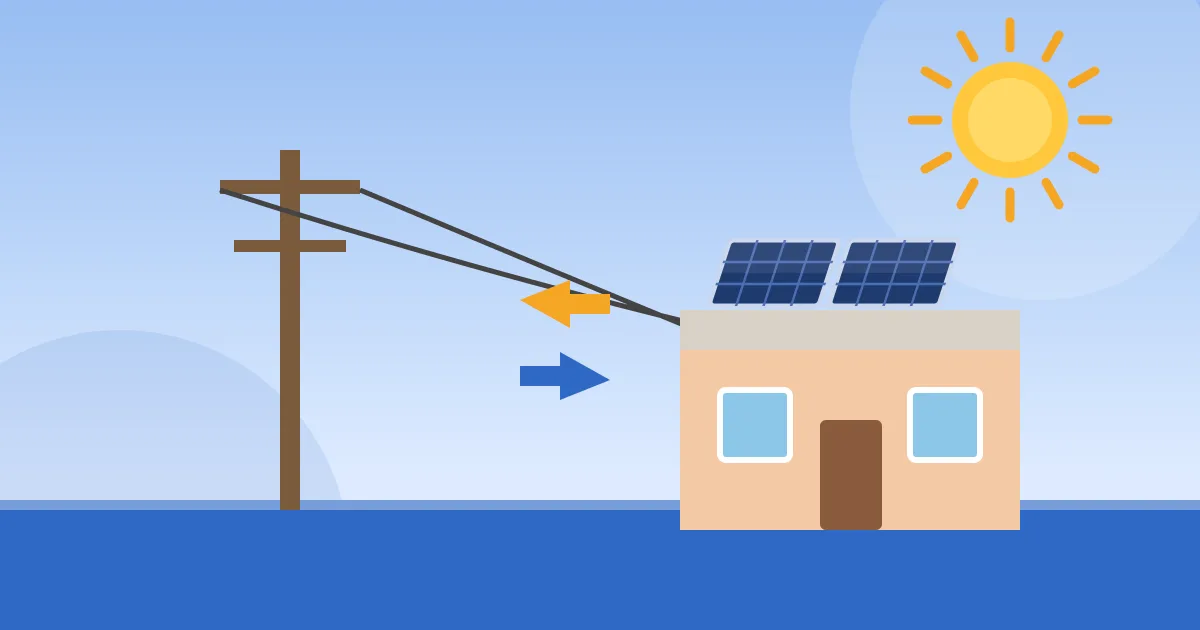
Net metering lets you export surplus units to the grid and be credited for them. But the terms differ: credit may be carried forward, adjusted against future bills, or settled at a lower rate at the end of the financial year, depending on the current regulations. Because of this, most households benefit most from a system sized close to their own use.
There is also a limit based on your sanctioned load. A net-metered system is normally restricted to a capacity linked to the sanctioned load on your connection, so check this figure on your bill. If your sanctioned load is 2 kW, ask the DISCOM or installer whether a larger system is allowed before you plan for it.
What an installer should give you
After a survey, a good installer gives you a written proposal with the recommended size, the number and rating of panels, the inverter size, the expected yearly generation and the assumptions behind it. Ask them to show how they arrived at the number using your bills, not just a general rule.
Compare at least two quotations. If one recommends a very different size from the others, ask why. The reason may be a real difference in roof space or load, or it may be a sales target. Either way, the explanation shows how the company works.
Common mistakes when estimating solar size
Most sizing errors come from a few avoidable habits. The first is using one unusually low or high bill. Another is copying a neighbour's system size even though their roof, shade and appliances differ. A third is asking for the largest system that fits on the roof in the hope of a zero bill, without checking the sanctioned load limit or how exported units are credited.
A better habit is to write down your twelve-month average, your highest month and your planned additions, then ask each installer to explain their recommendation against those numbers. A recommendation you understand is more likely to match what you need.
- Do not size from a single month's bill.
- Do not copy a neighbour's size without comparing roof and load.
- Do not assume the biggest system gives the biggest saving.
- Do ask how the expected generation figure was calculated.
FAQ
- How many units does a 1 kW system generate?
- In most of Uttar Pradesh, about 4 to 5 units a day on average, or roughly 120 to 150 units a month, depending on shade, tilt, dust and season.
- What size system does a 300-unit home need?
- Usually around 2 to 3 kW. A site survey confirms the exact size for your roof, your sanctioned load and any appliances you plan to add.
- Does an online solar calculator replace a site survey?
- No. A calculator gives a rough idea, but shade, roof condition, direction and sanctioned load change the real answer, so a survey gives a more reliable size.
- Is a bigger system always better?
- No. Beyond your own consumption, extra units are exported and may be credited at a lower value. Size close to your use, with a margin for planned appliances.
- How much roof space do I need for 3 kW?
- Roughly 24 to 30 square metres of usable, shadow-free roof, depending on the panel size and how the array is laid out.
Sources and official links
Figures in this article are general and may change. See our disclaimer, or contact us for a quotation specific to your site.